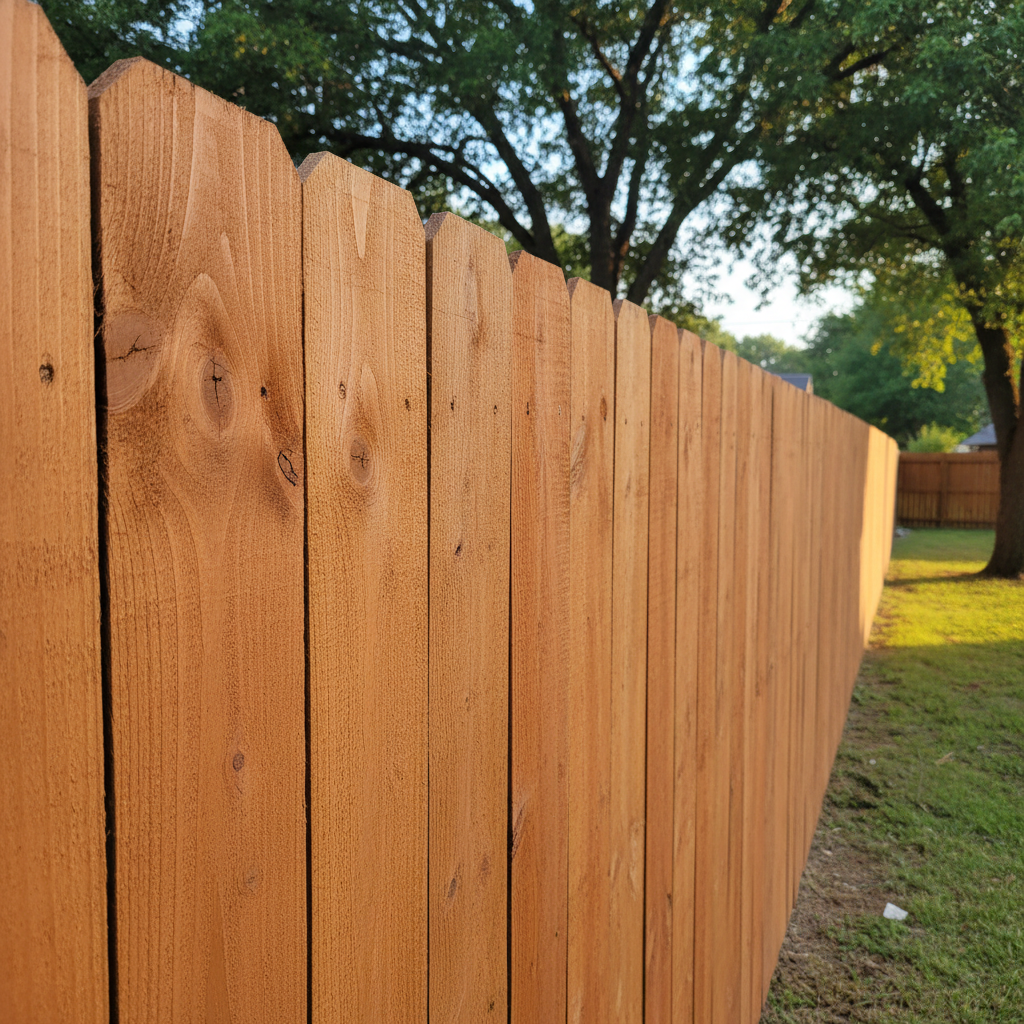
So, you're looking at your fence and thinking it could use a facelift, huh? Maybe it's looking a little weathered, or you just want to change up the curb appeal. The big question usually comes down to staining or painting. And let me tell you, there's a lot more to it than just picking a color.
Stain vs. Paint: What's the Real Difference?
This is where we gotta start. People often use these terms interchangeably, but they're not the same, and they do different things for your fence.
- Stain: Think of stain as something that soaks into the wood. It penetrates the fibers, protecting it from the inside out while still letting the natural wood grain show through. Stains come in different opacities – clear, semi-transparent, semi-solid, and solid. The more solid it is, the more color you get, but you'll lose some of that natural wood look. Stains tend to wear off over time, fading and needing reapplication, but they usually don't peel or chip like paint.
- Paint: Paint sits on top of the wood, forming a protective layer. It completely covers the wood grain, giving you a solid, uniform color. Paint offers excellent protection against moisture and UV rays because it creates that thick barrier. The downside? It can peel, crack, and chip, especially with our wild temperature swings here in North Texas. When it fails, it usually looks a lot worse than faded stain.
When to Stain, When to Paint
Alright, so which one's right for your fence? It really depends on a few things:
- New Fence? Stain is usually your best bet. If you've just put up a brand new cedar or treated pine fence, you probably want to show off that beautiful wood grain. A good quality stain (semi-transparent or semi-solid) will protect it from our intense Wichita Falls sun and those sudden downpours without hiding its natural beauty. You'll want to wait a few weeks for new pressure-treated wood to dry out properly before staining, otherwise, the stain won't penetrate right.
- Older, Weathered Fence? It's a tougher call. If your fence is already gray and weathered, but the wood is still sound, a solid stain or paint can bring it back to life. A solid stain will still let a tiny bit of texture show through, while paint will give you a completely opaque finish. If it's been painted before and is peeling, you've got a lot of prep work ahead of you to scrape and sand before you can repaint.
- Aesthetic Preference: Do you love the natural wood look? Stain. Want a bold color that matches your house trim? Paint. Simple as that.
The Prep Work: Don't Skip This Step!
I can't stress this enough: the success of your project, whether staining or painting, is 90% in the prep work. If you skip this, you're just wasting your time and money. Our red clay soil here can kick up a lot of dust, and that needs to come off.
- Clean it Up: First, get rid of any dirt, grime, mildew, or loose paint. A pressure washer is your best friend here, but be careful not to use too high a setting or hold it too close, especially on older wood, or you'll damage the fibers. You can also use a good fence cleaner. Let it dry completely – and I mean completely – for at least 24-48 hours, maybe even longer after a good rain.
- Scrape and Sand (if painting): If you're painting over an old painted fence that's peeling, you've got to scrape off all that loose stuff. Then, a light sanding will help the new paint adhere better. For staining, you usually don't need to sand unless the wood is really rough or splintered.
- Repair: Replace any rotten boards, tighten loose nails or screws, and make sure the fence is structurally sound. No point in making a pretty fence that's about to fall over.
Application: Doing it Right
Okay, the fence is clean and dry. Now what?
- Weather Matters: Don't try to stain or paint on a super windy day (you'll get overspray everywhere) or when it's scorching hot and humid. Check the forecast; you want a few days of dry weather with moderate temperatures. The ideal range is usually between 50-85 degrees Fahrenheit.
- Tools: You can use brushes, rollers, or a sprayer. Sprayers are fast, but they require more masking and can be tricky to get an even coat without drips. For most homeowners, a good quality brush and a roller for larger flat sections work great.
- Technique: Always apply in thin, even coats. Two thin coats are always better than one thick one. For stain, work with the grain. For paint, make sure you're covering completely without leaving brush marks. Don't let the product dry on your brush or roller.
- Edges and Corners: These are often missed. Take your time and make sure you get good coverage everywhere.
When to Call Allied Fencing (or another Pro)
Look, I'm all for DIY projects. It's satisfying to do things yourself. But sometimes, it's just not worth the headache or the risk of a botched job. Here's when you might want to call in the pros:
- Large or Complex Fences: If you've got hundreds of feet of fence, or a fence with intricate designs, it's a huge undertaking. A professional crew can get it done faster and often with better results.
- Extensive Damage: If your fence needs a lot of repairs, board replacements, or serious cleaning to remove years of neglect, that's a big job.
- Time Constraints: Don't have a free weekend (or two, or three) to dedicate to this? We do.
- Equipment: Don't own a pressure washer, sprayer, or all the right safety gear? Renting can add up, and buying for a one-off job might not make sense.
- Just Don't Want To: Hey, it's okay to admit you'd rather spend your weekend doing something else. That's what we're here for.
Whether you decide to tackle it yourself or call us up at Allied Fencing, taking care of your fence is a smart move. It protects your investment, boosts your home's appearance, and keeps it standing strong against whatever the Wichita Falls weather throws at it.