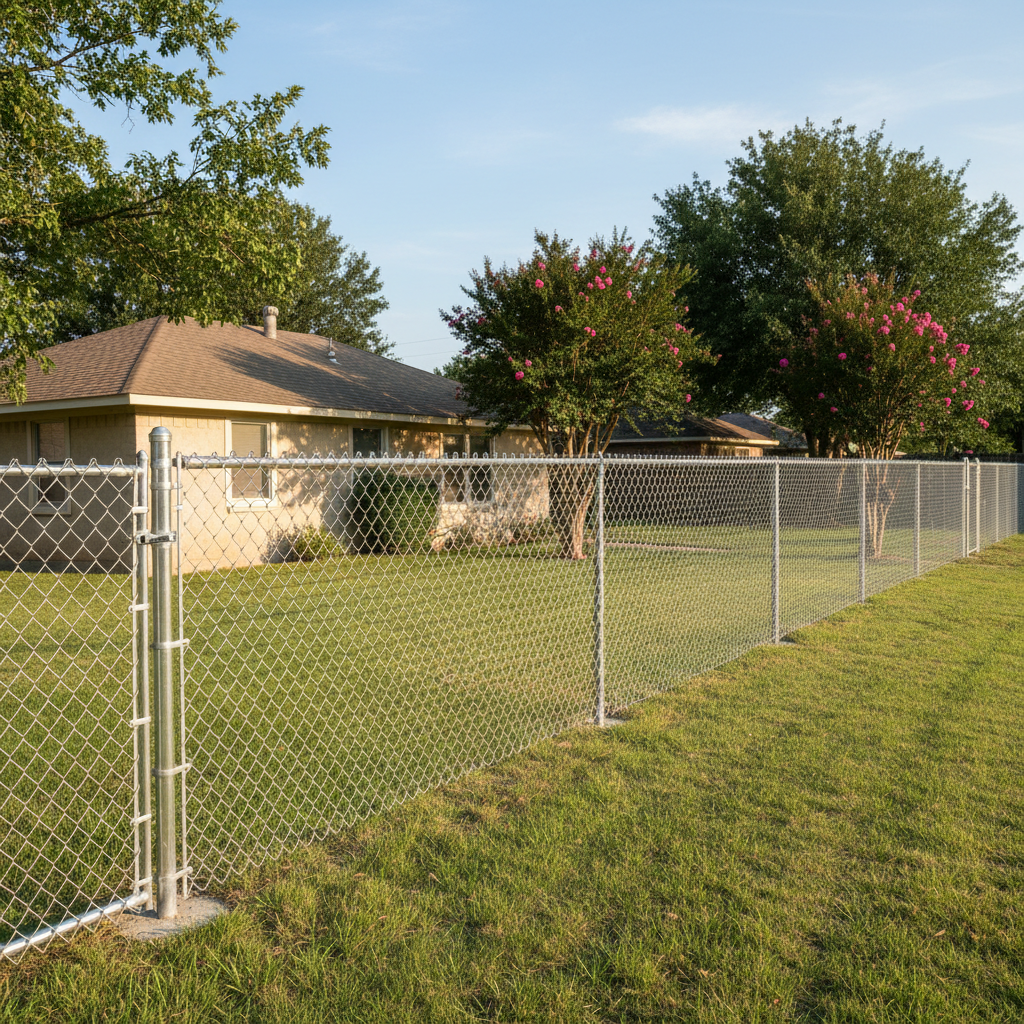
Alright, let's talk about chain link fences and what they'll actually cost you here in Wichita Falls. I get calls all the time from folks wanting a quick number, and while I wish it were that simple, a few things really push the price up or down. It's not just a 'per foot' thing, though that's where most people start, isn't it?
What Makes Chain Link Fencing Cost More or Less?
You'd think chain link is pretty straightforward, right? And it is, mostly. But even with something as common as chain link, there are always variables. Here's what I look at when I'm putting a quote together:
- Fence Height: This is a big one. A standard 4-foot fence is way cheaper per linear foot than a 6-foot or even 8-foot fence. Taller fences mean more material, stronger posts, and more labor to handle it all.
- Gauge of the Wire: This refers to how thick the steel wire is. A lower gauge number means thicker, stronger wire. So, 9-gauge is heavier duty and more expensive than 11.5-gauge. If you're just keeping pets in, 11.5 might be fine. But if you're securing a commercial property or want something really tough, you'll definitely want 9-gauge.
- Coating: Most chain link is galvanized steel, which is silver. But you can get vinyl-coated chain link in black, green, or brown. That vinyl coating adds a layer of protection and looks a lot nicer, but it also adds to the cost, sometimes significantly.
- Number of Gates: Every gate adds to the complexity and material cost. A simple walk-through gate is one thing; a double-drive gate for a vehicle is another entirely. We've got to dig bigger holes for those gate posts and make sure they're set perfectly plumb.
- Terrain and Soil Conditions: This is a big one for us around here. If your yard is flat and easy to dig, great. But if we're dealing with a sloped yard, rocky soil (which we see a lot of, especially out towards Lake Arrowhead), or a lot of tree roots, that means more labor and specialized equipment. It takes longer, and time, as they say, is money.
- Linear Footage: Obviously, the longer the fence, the more it costs. But sometimes, longer runs can actually bring the per-foot price down a little because of economies of scale with materials and labor setup.
Typical Price Ranges You Can Expect
Okay, let's get down to some real numbers. These are general ranges for Wichita Falls, and remember, these can fluctuate with material costs and demand. These prices usually include materials, labor, and basic site prep.
- Basic 4-foot Galvanized Chain Link (11.5-gauge): For a standard backyard fence, you're probably looking at around $15 to $25 per linear foot. This is your most economical option.
- Heavy-Duty 6-foot Galvanized Chain Link (9-gauge): If you need more security or height, a 6-foot fence with thicker wire will run you more like $22 to $35 per linear foot.
- 4-foot Vinyl-Coated Chain Link (Black or Green): For that nicer aesthetic, a 4-foot vinyl-coated fence often falls in the $20 to $35 per linear foot range. The coating really makes a difference.
- 6-foot Vinyl-Coated Chain Link (Black or Green): This is a popular choice for both security and looks. Expect to pay anywhere from $28 to $45+ per linear foot.
Add-ons like custom gates, privacy slats, or extensive site work will push these numbers higher. For example, a single 4-foot walk gate might add $200-$400, while a 12-foot double-drive gate could be $600-$1000, depending on the hardware and materials.
What Should Be in Your Quote?
When Allied Fencing gives you a quote, or any reputable company for that matter, it should be clear and easy to understand. You want to see:
- Linear footage and height of the fence.
- Type of chain link: Galvanized or vinyl-coated, and the gauge.
- Number and type of gates: Walk gates, drive gates, cantilever gates, etc.
- Materials breakdown: Posts, fabric, top rail, fittings, concrete.
- Labor costs: Digging, setting posts, stretching fabric, installing gates.
- Permit costs: If the city requires one for your specific project.
- Debris removal: What happens to the old fence, if there is one.
- Warranty information: On both materials and workmanship.
- Start and completion dates (estimated).
Don't just look at the bottom line. Understand what you're actually paying for.
How to Avoid Overpaying for Your Chain Link Fence
Nobody wants to get ripped off. Here's my advice:
- Get Multiple Quotes: This is a no-brainer. Get at least three detailed quotes from local, reputable companies. Compare apples to apples.
- Check References and Reviews: See what other folks in Wichita Falls are saying. Are they reliable? Do they stand by their work?
- Ask About Experience: How long have they been installing fences? Do they specialize in chain link?
- Don't Always Go for the Cheapest: The lowest bid often means corners are being cut. Maybe they're using thinner gauge wire, less concrete in the posts, or inexperienced labor. You get what you pay for, especially with something that needs to last for years.
- Understand the Contract: Read everything before you sign. Make sure all the details we talked about are in writing.
A good chain link fence is an investment, whether it's for security, pets, or just defining your property line. Do your homework, ask the right questions, and you'll end up with a fence that serves you well for a long time.